About Me
Archive
- Blackout
- Faster Than Light
- Hex Board
- Invariants
- Listening To OEIS
- Logic Gates
- Penrose Maze
- Syntactic Sugar
- Terminal Colors
Notes
Puzzles
Tree Editors
Programming
- Typst as a Language
- A Twist on Wadler's Printer
- Preventing Log4j with Capabilities
- Algebra and Data Types
- Pixel to Hex
- Linear vs Binary Search
Physics
Math
- Lindenmayer Systems
- Traffic Engineering with Portals, Part II
- Traffic Engineering with Portals
- Algebra and Data Types
- What's a Confidence Interval?
PL Design
Games
- Liars' Letters
- Lindenmayer Systems
- Imagining a Language without Booleans
- JJ Cheat Sheet
- Typst as a Language
- A Twist on Wadler's Printer
- Space Logistics
- Hilbert's Curve
- Preventing Log4j with Capabilities
- Traffic Engineering with Portals, Part II
- Traffic Engineering with Portals
- Algebra and Data Types
- What's a Confidence Interval?
- Uncalibrated quantum experiments act clasically
- Pixel to Hex
- Linear vs Binary Search
- There and Back Again
- Tree Editor Survey
- Rust Quick Reference
- The Prisoners' Lightbulb
- Notes on Concurrency
- It's a blog now!
All Posts
Lindenmayer Systems
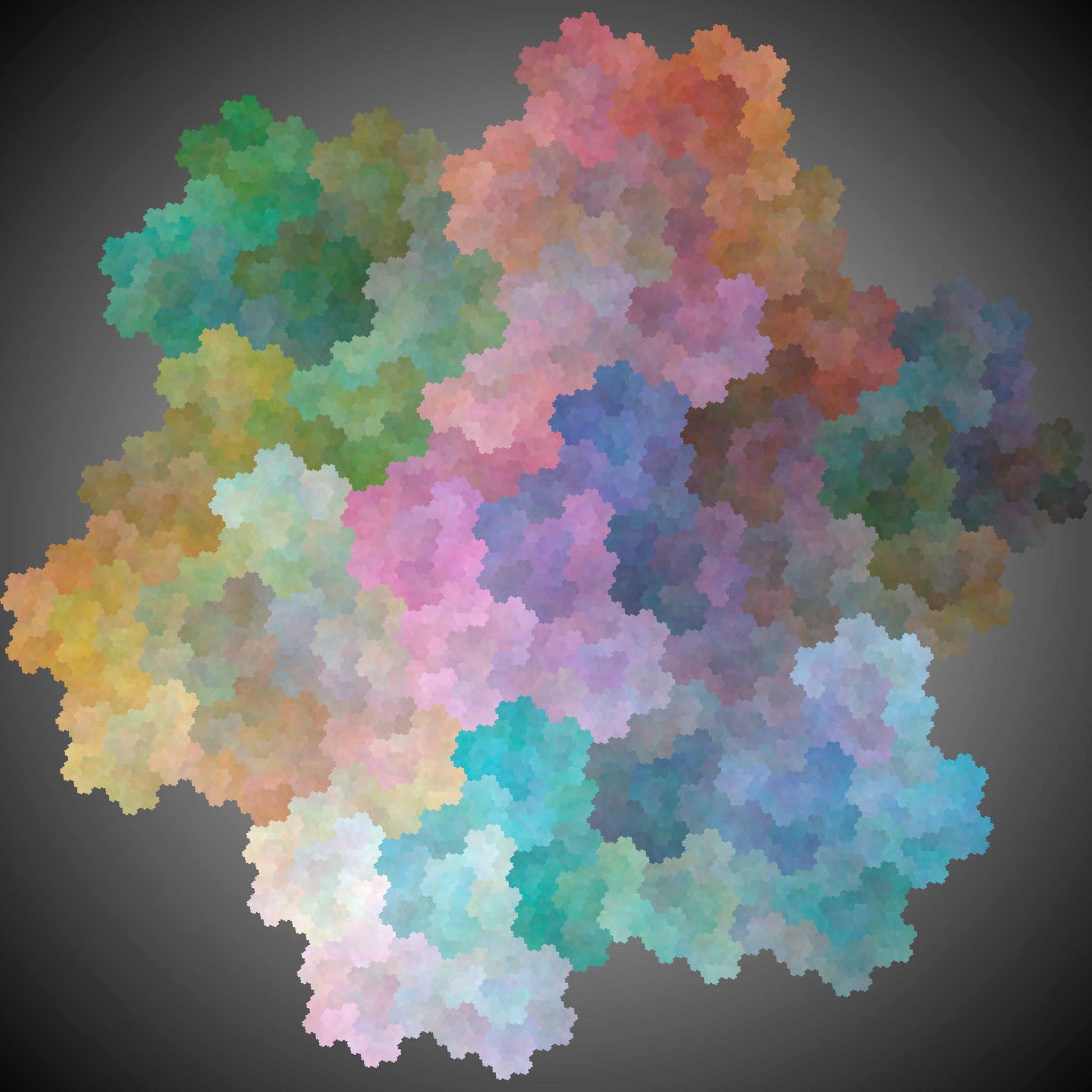
Let me show you how to use Lindenmayer systems to produce beautiful images like this one:
Turtles
We’ll start by talking about turtles.
Some of you are nodding along like this is an obvious starting point; others are rather confused. In 1967(!) some brilliant engineers designed an educational programming language called Logo. It lets you make turtle graphics drawings by telling a “turtle” with a “pen” where to walk on the screen, drawing a line as it goes. I just learned when writing this that there were also physical programmable turtles that would draw on paper!
So yeah, we’re startings with turtles. Logo turtles had all sorts of fancy commands, but ours will need just three:
fmeans “walk forward one unit”-means “turn left a quarter turn”+means “turn right a quarter turn”
The turtle starts in the center of the screen facing up. So the program -f+ff
will drawn an “L”:

The turtle’s path is drawn as a gradient from white to yellow to green. If you have an active imagination you can pretend that the green dot at the end is a turtle.
And the program f+f--f+f+f will draw an “F”:

Angles
What if you want your turtle to turn at angles other than a quarter turn? We
could go the route that Logo did, and give an arbitrary angle for every turn.
But for the sorts of drawing we’re going to do we can get away with something
simpler: we’ll declare up front what angle - and + should turn. (Measured in
turns, of course.)
For example, to draw a hexagon we could use the angle 1/6 and run the turtle
program f+f+f+f+f+f+:

Aristid Lindenmayer
Drawing a detailed image this way would take a really long sequence of -,
+, and f. Again, Logo solved this in a general way by adding loops to the
language, but we’re going to do something a lot more specialized. We’re going to
use an idea by Aristid Lindenmayer in 1968, now called “Lindenmayer Systems” or
“L-Systems”.
(This timing—Logo in 1967 and L-Systems in 1968—is suspicious, isn’t it? I’m not aware of any explicit cross-polination of ideas between Lindenmayer and the Logo creators, but wouldn’t be surprised if one partially inspired the other.)
Lindenmayer’s idea is to have a start string, and some production rules that replace a letter with a sequence of instructions. You start with the start string and repeatedly replace letters according to the production rules for some number of iterations. Then you have the turtle follow the (now very long) sequence of instructions.
This will be easier to follow with an example.
One pretty picture that can be drawn with an L-system is the dragon curve. Its rules are:
start: R
productions:
    R -> Rf+L
    L -> Rf-L
angle: 1/4
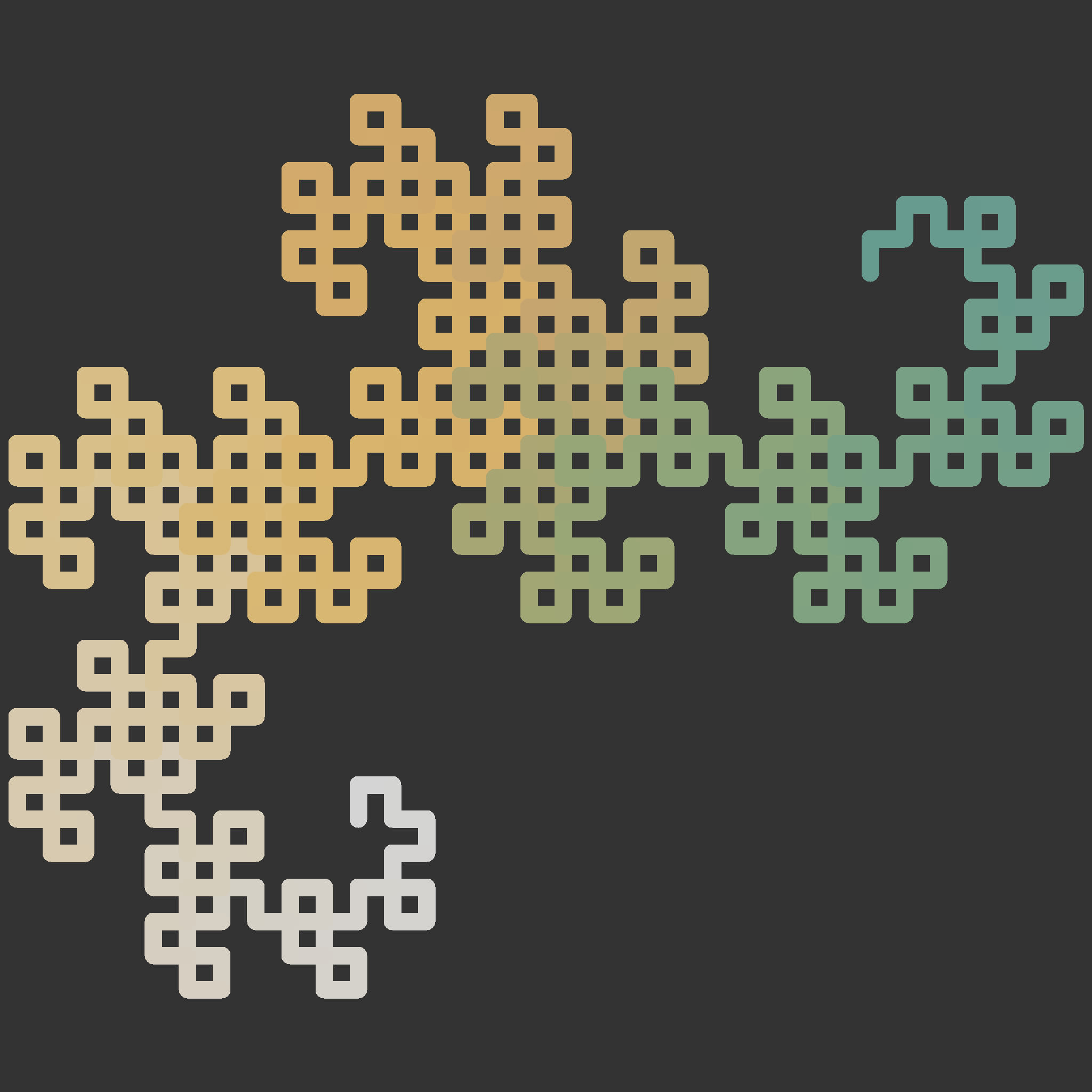
Iterations of the dragon curve look like this:
- The 0th iteration starts with the
startstring, so it’s justR. - The 1st iteration replaces that
Raccording to the production ruleR -> Rf+L, so it becomesRf+L. - The 2nd iteration replaces both the
RandLaccording to the production rules, givingRf+Lf+Rf-L. - And so on.
We get to choose how many iterations to do. Let’s say we do 9 iterations. Then we get:
Rf+Lf+Rf-Lf+Rf+Lf-Rf-Lf+Rf+Lf+Rf-Lf-Rf+Lf-Rf-Lf+Rf+Lf+Rf-Lf+
Rf+Lf-Rf-Lf-Rf+Lf+Rf-Lf-Rf+Lf-Rf-Lf+Rf+Lf+Rf-Lf+Rf+Lf-Rf-Lf+
Rf+Lf+Rf-Lf-Rf+Lf-Rf-Lf-Rf+Lf+Rf-Lf+Rf+Lf-Rf-Lf-Rf+Lf+Rf-Lf-
Rf+Lf-Rf-Lf+Rf+Lf+Rf-Lf+Rf+Lf-Rf-Lf+Rf+Lf+Rf-Lf-Rf+Lf-Rf-Lf+
Rf+Lf+Rf-Lf+Rf+Lf-Rf-Lf-Rf+Lf+Rf-Lf-Rf+Lf-Rf-Lf-Rf+Lf+Rf-Lf+
Rf+Lf-Rf-Lf+Rf+Lf+Rf-Lf-Rf+Lf-Rf-Lf-Rf+Lf+Rf-Lf+Rf+Lf-Rf-Lf-
Rf+Lf+Rf-Lf-Rf+Lf-Rf-Lf+Rf+Lf+Rf-Lf+Rf+Lf-Rf-Lf+Rf+Lf+Rf-Lf-
Rf+Lf-Rf-Lf+Rf+Lf+Rf-Lf+Rf+Lf-Rf-Lf-Rf+Lf+Rf-Lf-Rf+Lf-Rf-Lf+
Rf+Lf+Rf-Lf+Rf+Lf-Rf-Lf+Rf+Lf+Rf-Lf-Rf+Lf-Rf-Lf-Rf+Lf+Rf-Lf+
Rf+Lf-Rf-Lf-Rf+Lf+Rf-Lf-Rf+Lf-Rf-Lf-Rf+Lf+Rf-Lf+Rf+Lf-Rf-Lf+
Rf+Lf+Rf-Lf-Rf+Lf-Rf-Lf+Rf+Lf+Rf-Lf+Rf+Lf-Rf-Lf-Rf+Lf+Rf-Lf-
Rf+Lf-Rf-Lf-Rf+Lf+Rf-Lf+Rf+Lf-Rf-Lf+Rf+Lf+Rf-Lf-Rf+Lf-Rf-Lf-
Rf+Lf+Rf-Lf+Rf+Lf-Rf-Lf-Rf+Lf+Rf-Lf-Rf+Lf-Rf-Lf+Rf+Lf+Rf-Lf+
Rf+Lf-Rf-Lf+Rf+Lf+Rf-Lf-Rf+Lf-Rf-Lf+Rf+Lf+Rf-Lf+Rf+Lf-Rf-Lf-
Rf+Lf+Rf-Lf-Rf+Lf-Rf-Lf+Rf+Lf+Rf-Lf+Rf+Lf-Rf-Lf+Rf+Lf+Rf-Lf-
Rf+Lf-Rf-Lf-Rf+Lf+Rf-Lf+Rf+Lf-Rf-Lf-Rf+Lf+Rf-Lf-Rf+Lf-Rf-Lf+
Rf+Lf+Rf-Lf+Rf+Lf-Rf-Lf+Rf+Lf+Rf-Lf-Rf+Lf-Rf-Lf+Rf+Lf+Rf-Lf+
Rf+Lf-Rf-Lf-Rf+Lf+Rf-Lf-Rf+Lf-Rf-Lf-Rf+Lf+Rf-Lf+Rf+Lf-Rf-Lf+
Rf+Lf+Rf-Lf-Rf+Lf-Rf-Lf-Rf+Lf+Rf-Lf+Rf+Lf-Rf-Lf-Rf+Lf+Rf-Lf-
Rf+Lf-Rf-Lf-Rf+Lf+Rf-Lf+Rf+Lf-Rf-Lf+Rf+Lf+Rf-Lf-Rf+Lf-Rf-Lf+
Rf+Lf+Rf-Lf+Rf+Lf-Rf-Lf-Rf+Lf+Rf-Lf-Rf+Lf-Rf-Lf+Rf+Lf+Rf-Lf+
Rf+Lf-Rf-Lf+Rf+Lf+Rf-Lf-Rf+Lf-Rf-Lf-Rf+Lf+Rf-Lf+Rf+Lf-Rf-Lf-
Rf+Lf+Rf-Lf-Rf+Lf-Rf-Lf-Rf+Lf+Rf-Lf+Rf+Lf-Rf-Lf+Rf+Lf+Rf-Lf-
Rf+Lf-Rf-Lf+Rf+Lf+Rf-Lf+Rf+Lf-Rf-Lf-Rf+Lf+Rf-Lf-Rf+Lf-Rf-Lf-
Rf+Lf+Rf-Lf+Rf+Lf-Rf-Lf+Rf+Lf+Rf-Lf-Rf+Lf-Rf-Lf-Rf+Lf+Rf-Lf+
Rf+Lf-Rf-Lf-Rf+Lf+Rf-Lf-Rf+Lf-Rf-L
Now we just need to tell the turtle to follow these instructions. But… what’s
it supposed to do with all the Rs and Ls? Simple: it will just ignore them.
Erasing them from the string gives:
f+f+f-f+f+f-f-f+f+f+f-f-f+f-f-f+f+f+f-f+f+f-f-f-f+f+f-f-f+f-
f-f+f+f+f-f+f+f-f-f+f+f+f-f-f+f-f-f-f+f+f-f+f+f-f-f-f+f+f-f-
f+f-f-f+f+f+f-f+f+f-f-f+f+f+f-f-f+f-f-f+f+f+f-f+f+f-f-f-f+f+
f-f-f+f-f-f-f+f+f-f+f+f-f-f+f+f+f-f-f+f-f-f-f+f+f-f+f+f-f-f-
f+f+f-f-f+f-f-f+f+f+f-f+f+f-f-f+f+f+f-f-f+f-f-f+f+f+f-f+f+f-
f-f-f+f+f-f-f+f-f-f+f+f+f-f+f+f-f-f+f+f+f-f-f+f-f-f-f+f+f-f+
f+f-f-f-f+f+f-f-f+f-f-f-f+f+f-f+f+f-f-f+f+f+f-f-f+f-f-f+f+f+
f-f+f+f-f-f-f+f+f-f-f+f-f-f-f+f+f-f+f+f-f-f+f+f+f-f-f+f-f-f-
f+f+f-f+f+f-f-f-f+f+f-f-f+f-f-f+f+f+f-f+f+f-f-f+f+f+f-f-f+f-
f-f+f+f+f-f+f+f-f-f-f+f+f-f-f+f-f-f+f+f+f-f+f+f-f-f+f+f+f-f-
f+f-f-f-f+f+f-f+f+f-f-f-f+f+f-f-f+f-f-f+f+f+f-f+f+f-f-f+f+f+
f-f-f+f-f-f+f+f+f-f+f+f-f-f-f+f+f-f-f+f-f-f-f+f+f-f+f+f-f-f+
f+f+f-f-f+f-f-f-f+f+f-f+f+f-f-f-f+f+f-f-f+f-f-f-f+f+f-f+f+f-
f-f+f+f+f-f-f+f-f-f+f+f+f-f+f+f-f-f-f+f+f-f-f+f-f-f+f+f+f-f+
f+f-f-f+f+f+f-f-f+f-f-f-f+f+f-f+f+f-f-f-f+f+f-f-f+f-f-f-f+f+
f-f+f+f-f-f+f+f+f-f-f+f-f-f+f+f+f-f+f+f-f-f-f+f+f-f-f+f-f-f-
f+f+f-f+f+f-f-f+f+f+f-f-f+f-f-f-f+f+f-f+f+f-f-f-f+f+f-f-f+f-
f-
If we tell our little turtle to follow those instructions, it will draw:
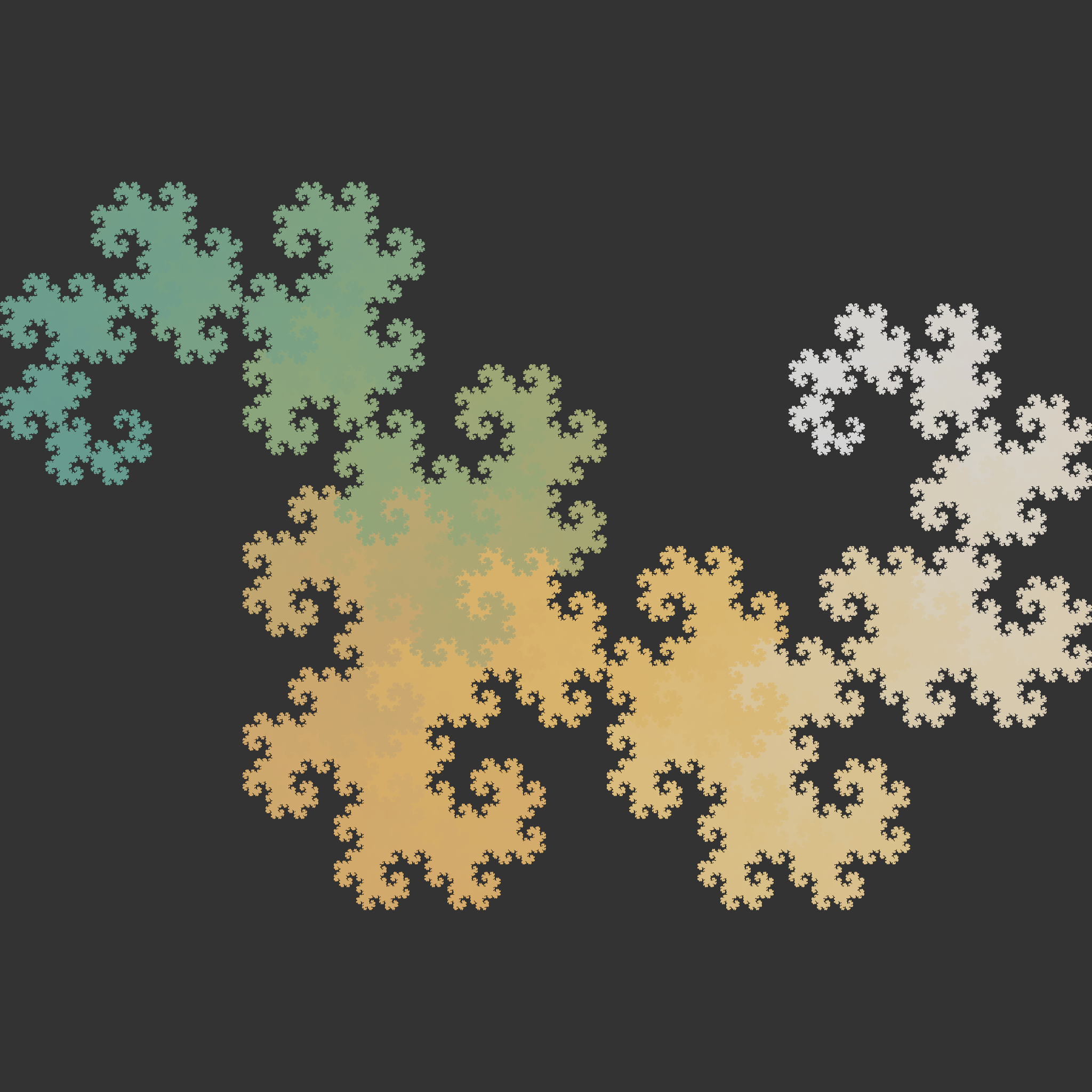
What happens if we go further? After about 22 iterations (producing about 8 million instructions), the turtle is making turns smaller than a pixel on the screen, so the path it took is no longer directly visible: you just see the color gradient it was drawn with. Adding more iterations after that doesn’t make the image look any different (beyond rotating), it has stabilized. It looks like this:
Code
I implemented all this as a Rust library. Here’s the code for that dragon curve:
LindenmayerSystem {
    start: "R",
    rules: &[('R', "Rf+L"), ('L', "Rf-L")],
    angle: 0.25,
    implicit_f: false,
}
The extra field implicit_f tells the turtle what to do with leftover letters
like L and R in the expanded program. For the dragon curve, like I said
above, we should just erase them. But sometimes it’s more convenient to replace
them with f; setting implicit_f: true would do so.
(There’s a math question here: can you express any L-system with implicit_f:
true as an L-system with implicit_f: false and vice-versa? I don’t know the
answer.)
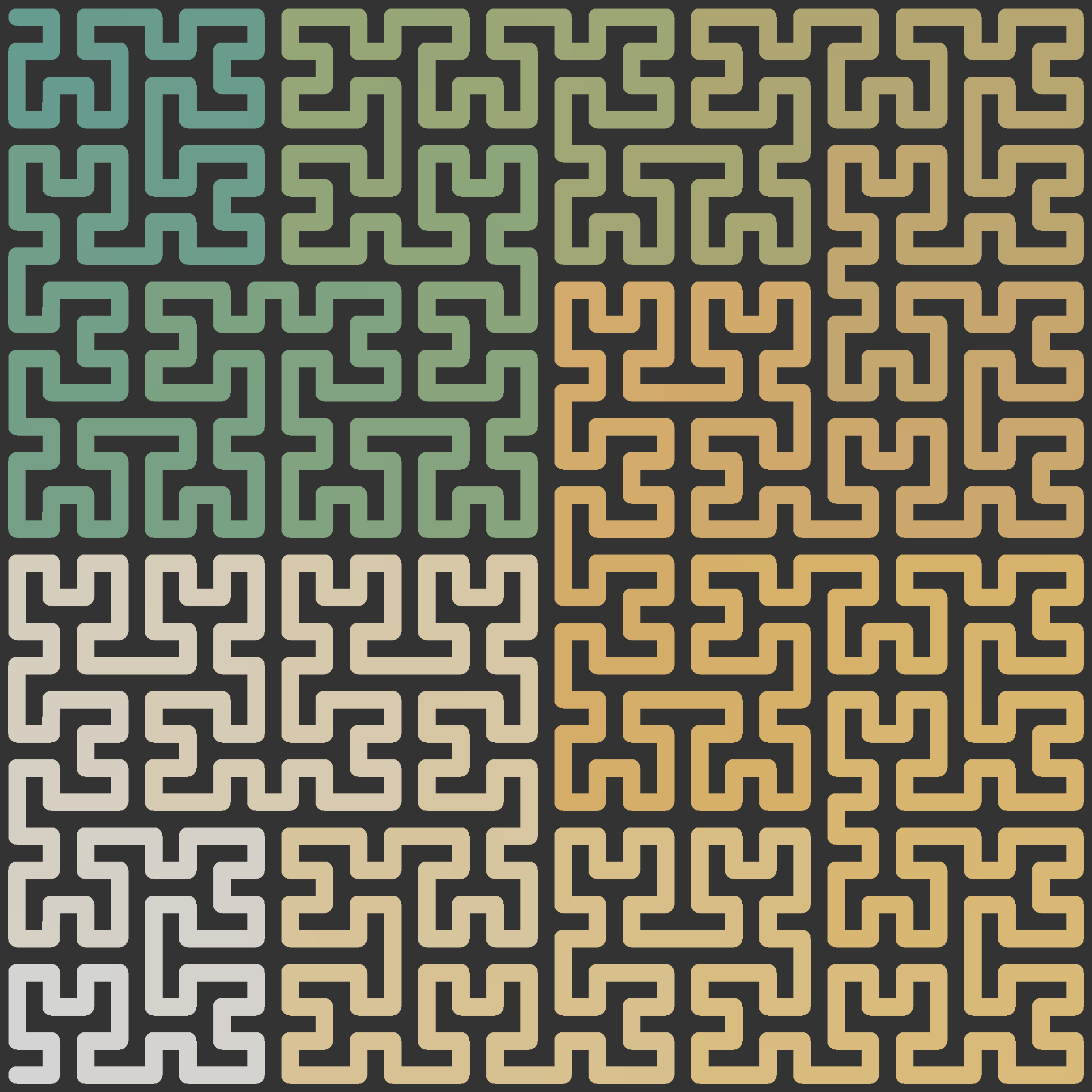
Here are a couple more L-systems, to give you a sense what they look like. First David Hilbert’s space filling curve:
LindenmayerSystem {
start: "A",
rules: &[('A', "+Bf-AfA-fB+"), ('B', "-Af+BfB+fA-")],
angle: 0.25,
implicit_f: false,
}
Which looks like this, at 5 iterations:
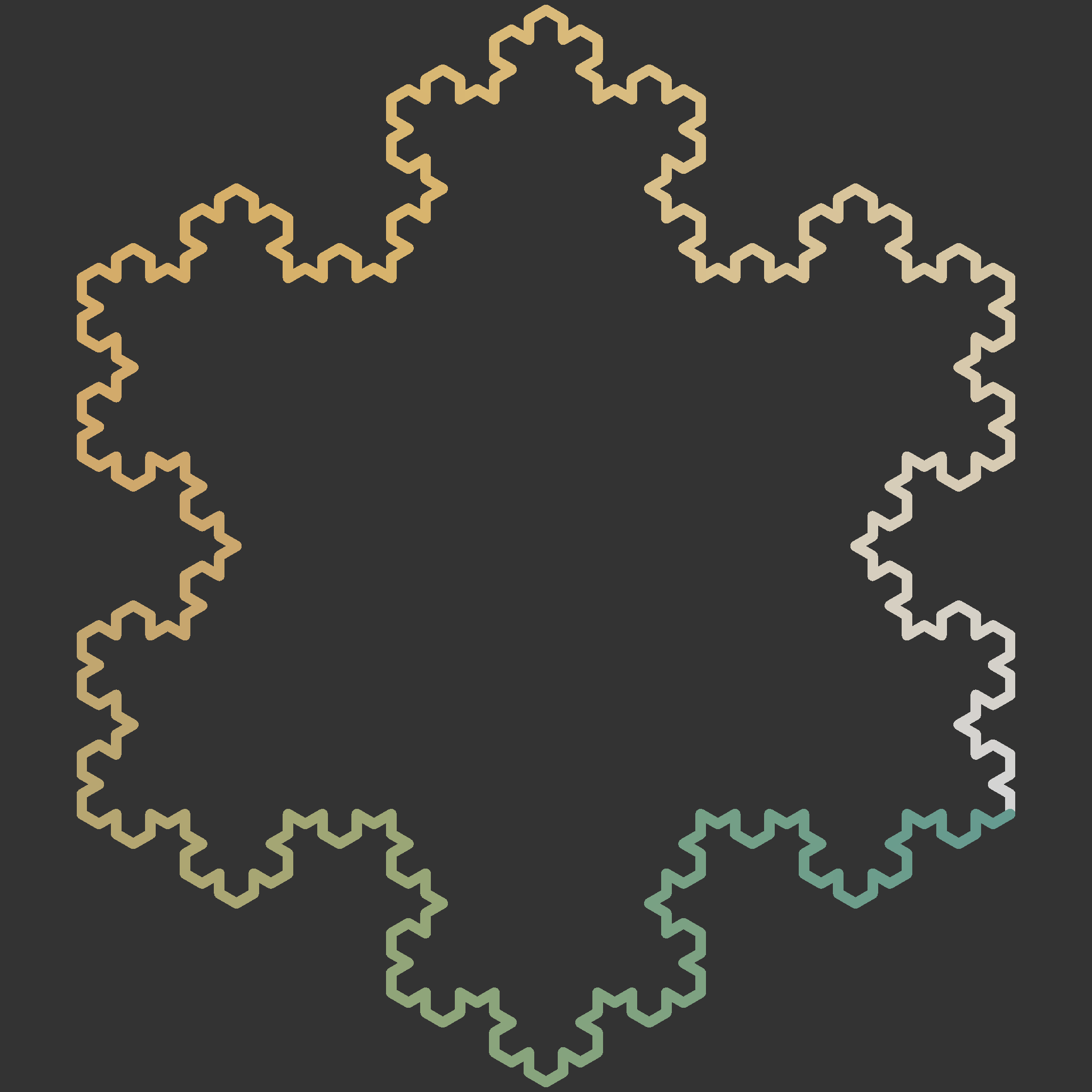
And here’s Helge von Koch’s snowflake, at 3 iterations:
LindenmayerSystem {
start: "X-X-X-X-X-X",
rules: &[('X', "X-X++X-X")],
angle: 1.0 / 6.0,
implicit_f: true,
}
Gradient
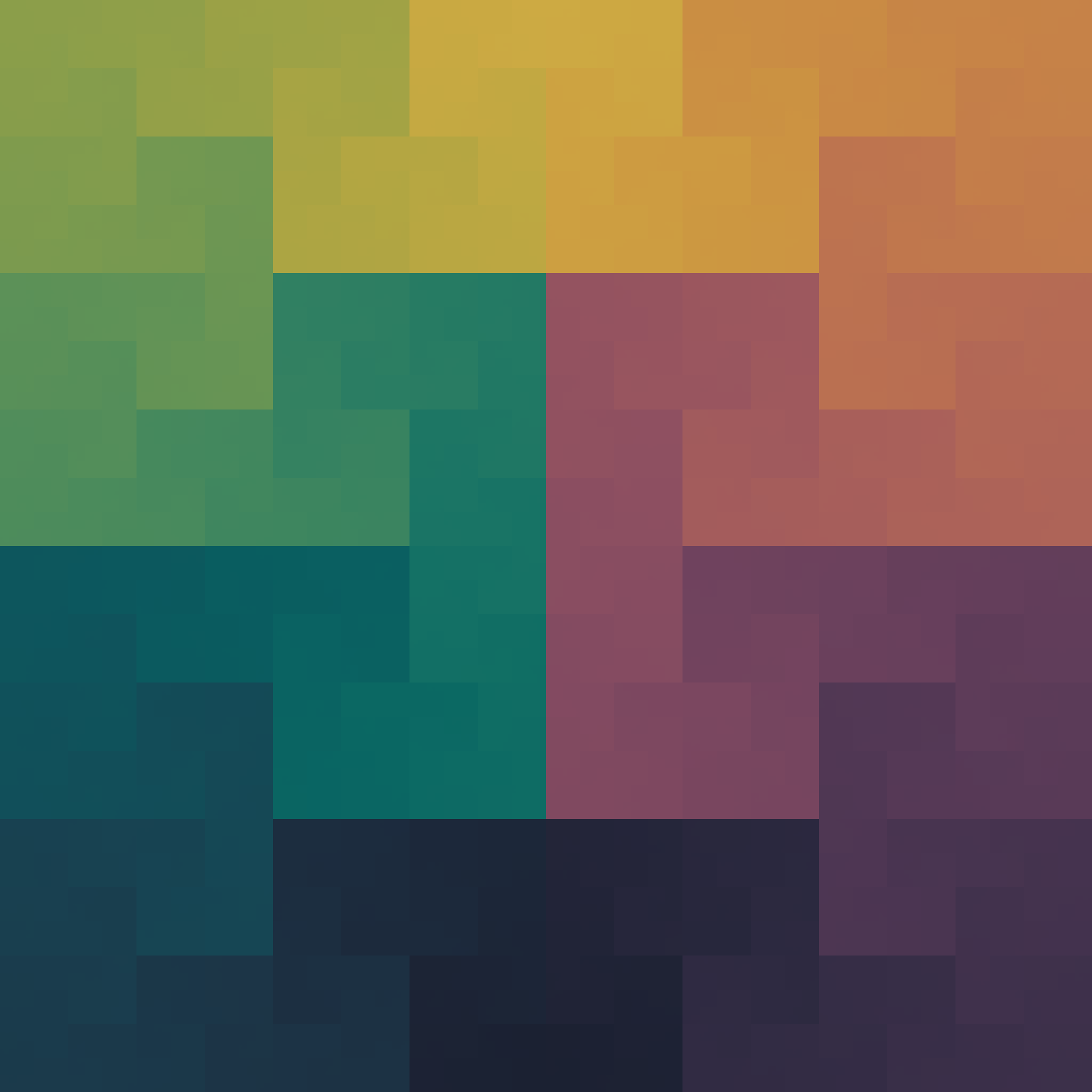
So far all the pictures have been drawn with the same color gradient, but you might want to use others. The gradients I’ve implemented fall into three categories:
- CET perceptually uniform color maps. These are color gradients designed to be perceptually uniform. The gradient used in all the examples so far is CET-L10.
- Color gradients built out of combinators for things like scaling, cycling, and sawtoothing. These are all in OK-LAB color space.
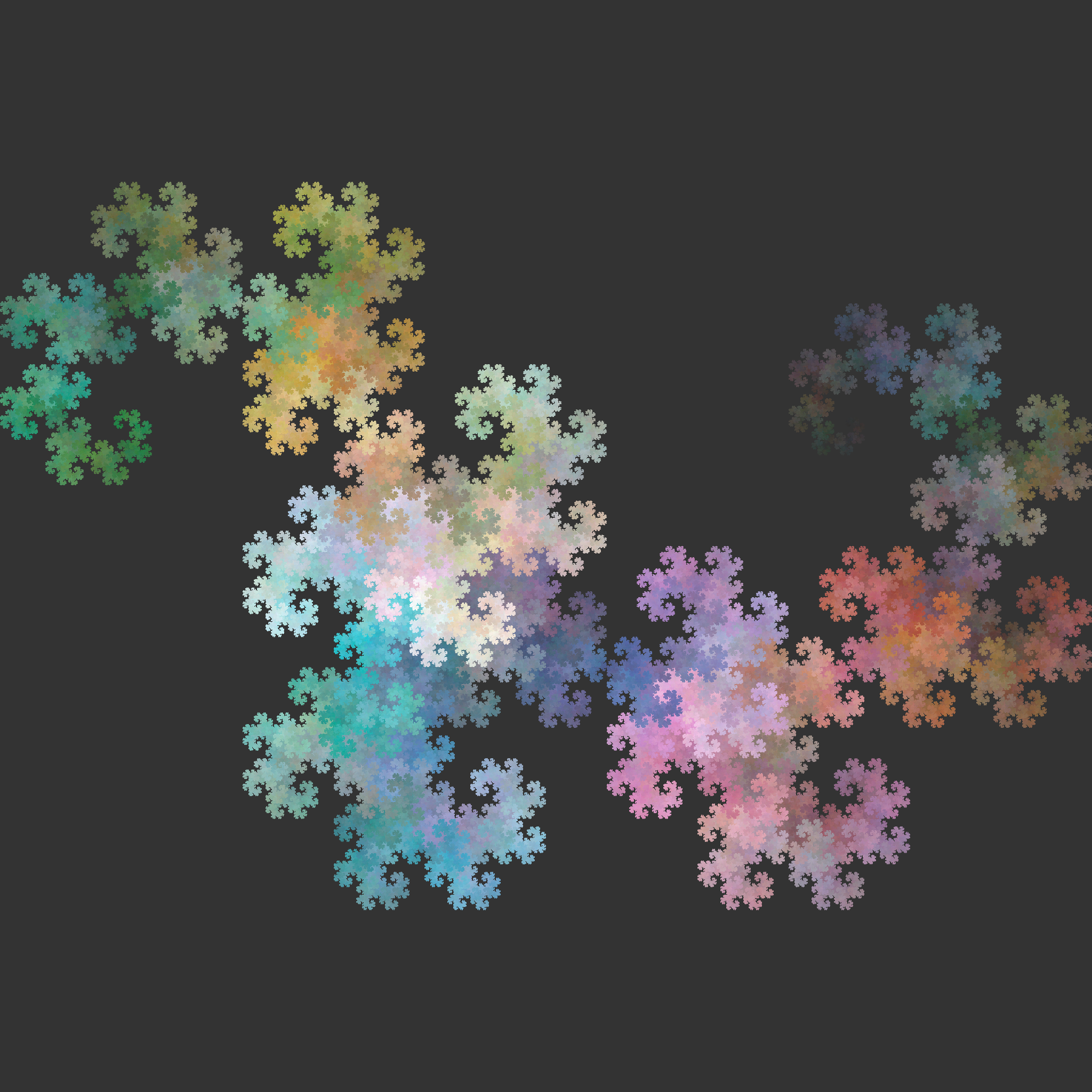
- A very fancy color gradient based on the 3D Hilbert curve. The idea is to (i) draw a cube in OK-LAB color space; (ii) trace a 3D Hilbert curve through the cube; (iii) dye the curve according to the cube’s colors; then (iv) straighten the curve and then lay it out on the curve that you’re drawing.
The last approach makes for very textured pictures since the 3D Hilbert curve changes color so quickly. (It covers all the colors on the cube, which is most possible colors.) For example, here’s the dragon curve with a 3D-Hilbert curve color gradient:
Pretty Pictures
Putting this all together, you can draw some very pretty pictures.
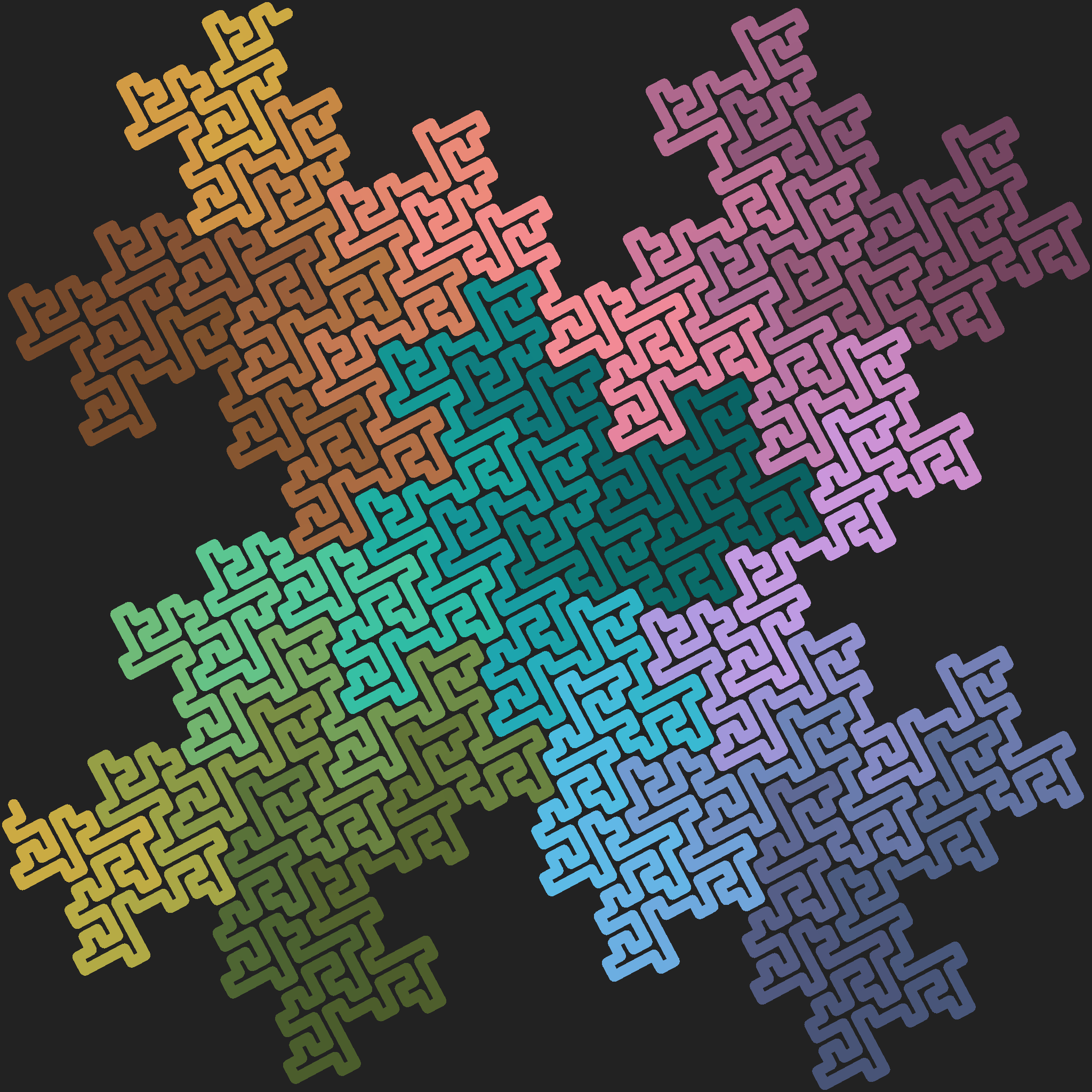
A curve from J. Arioni in 2017:
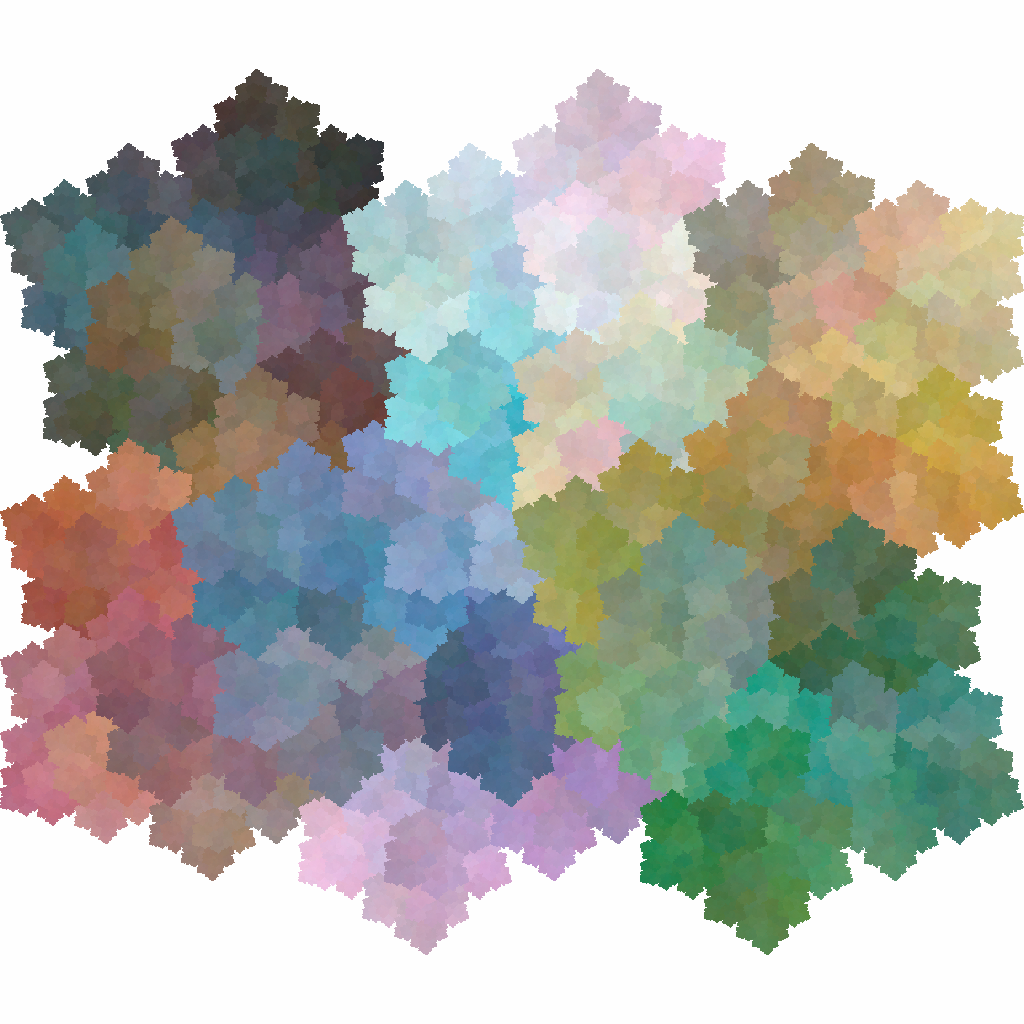
A haphazard curve I made that’s pretty nonetheless:
Moore’s curve:
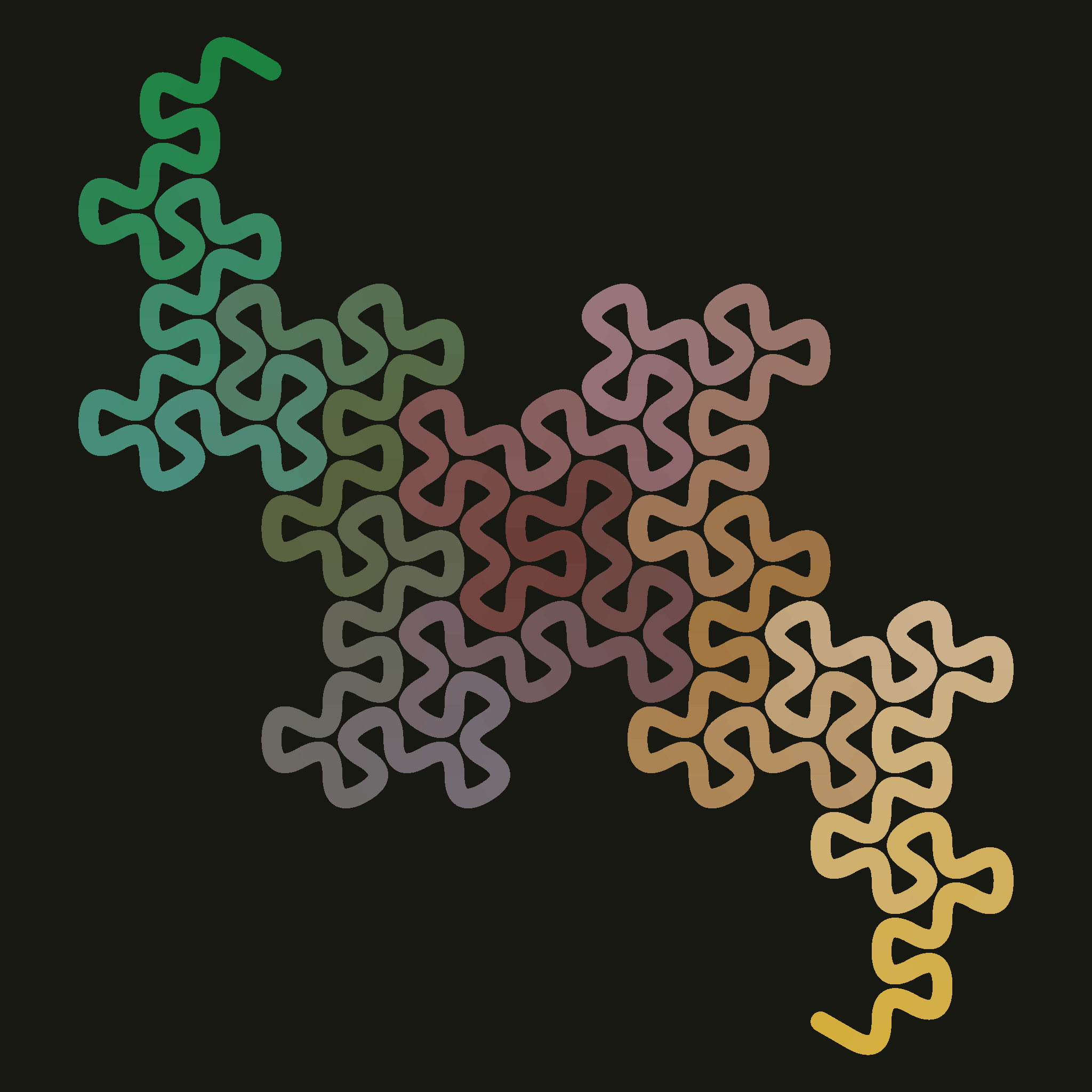
An “s curve” of my devising.
UPDATE: I said in the readme about this curve that “It’s very simple, so I wouldn’t be surprised if I wasn’t the first to find it.” Indeed, someone emailed me to point out it was discovered by Knuth and Davis under the name “Terdragon curve”: it can be viewed as a variant of the dragon curve.
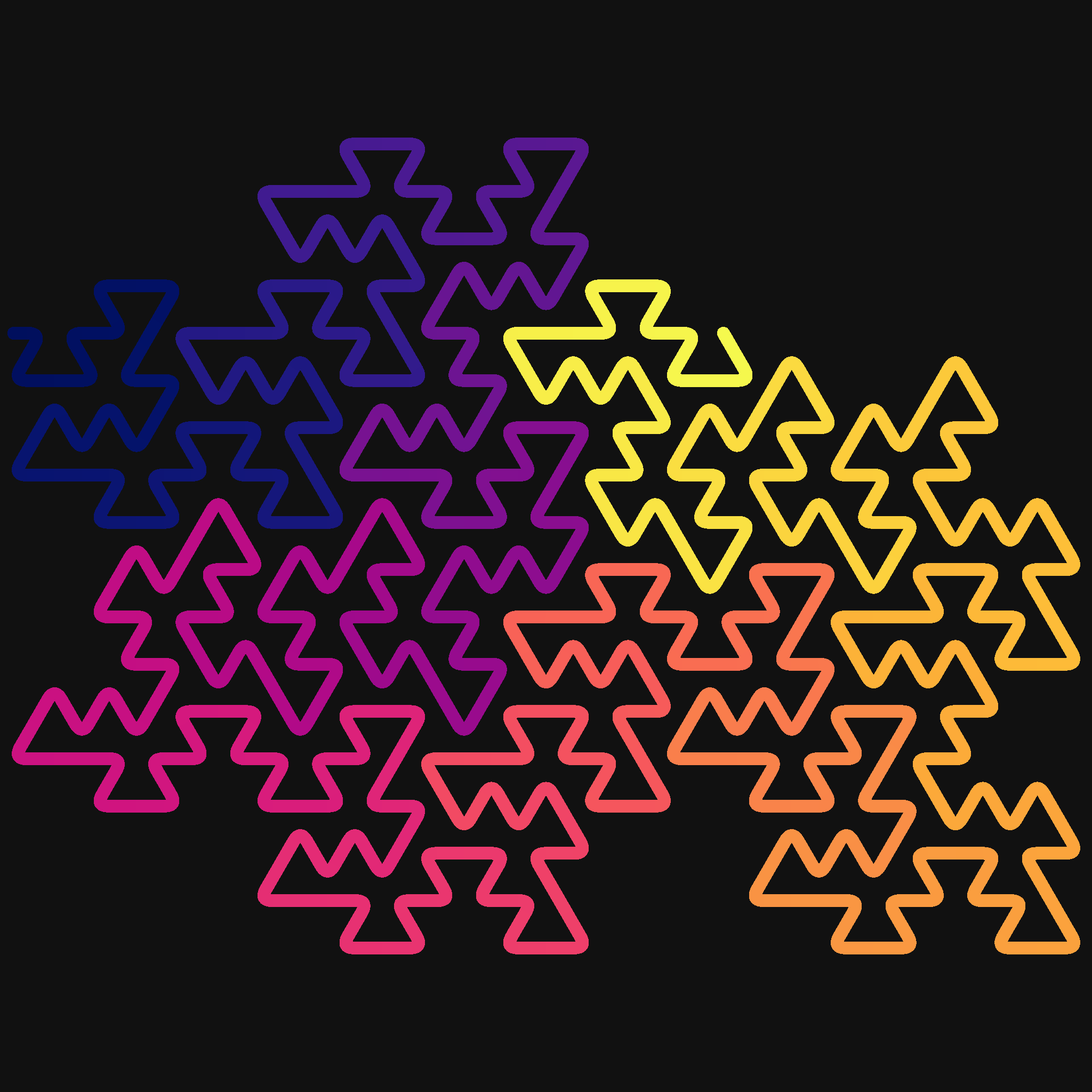
A curve from Dieter K. Steemann on Pinterest:
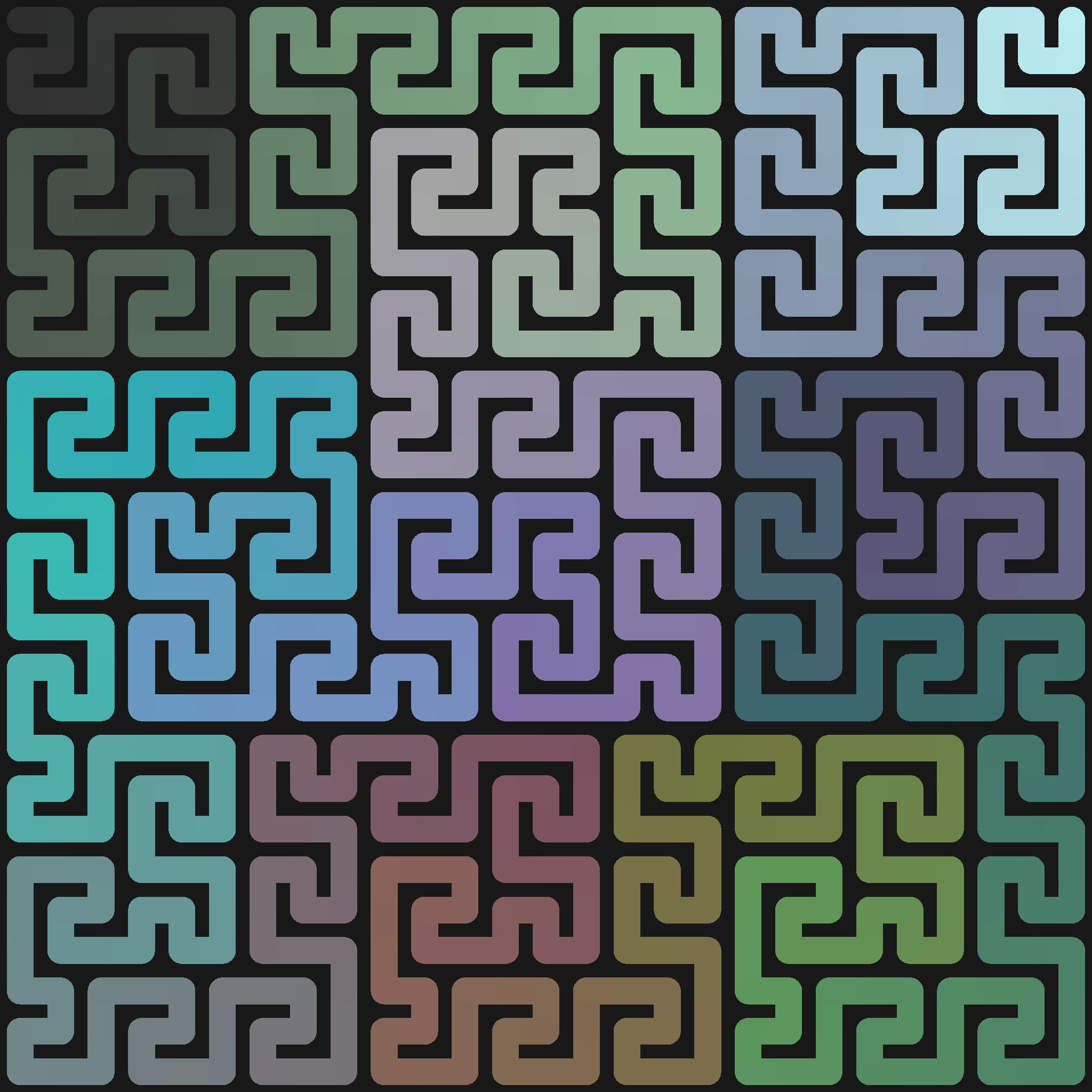
Wunderlich’s third space filling curve:
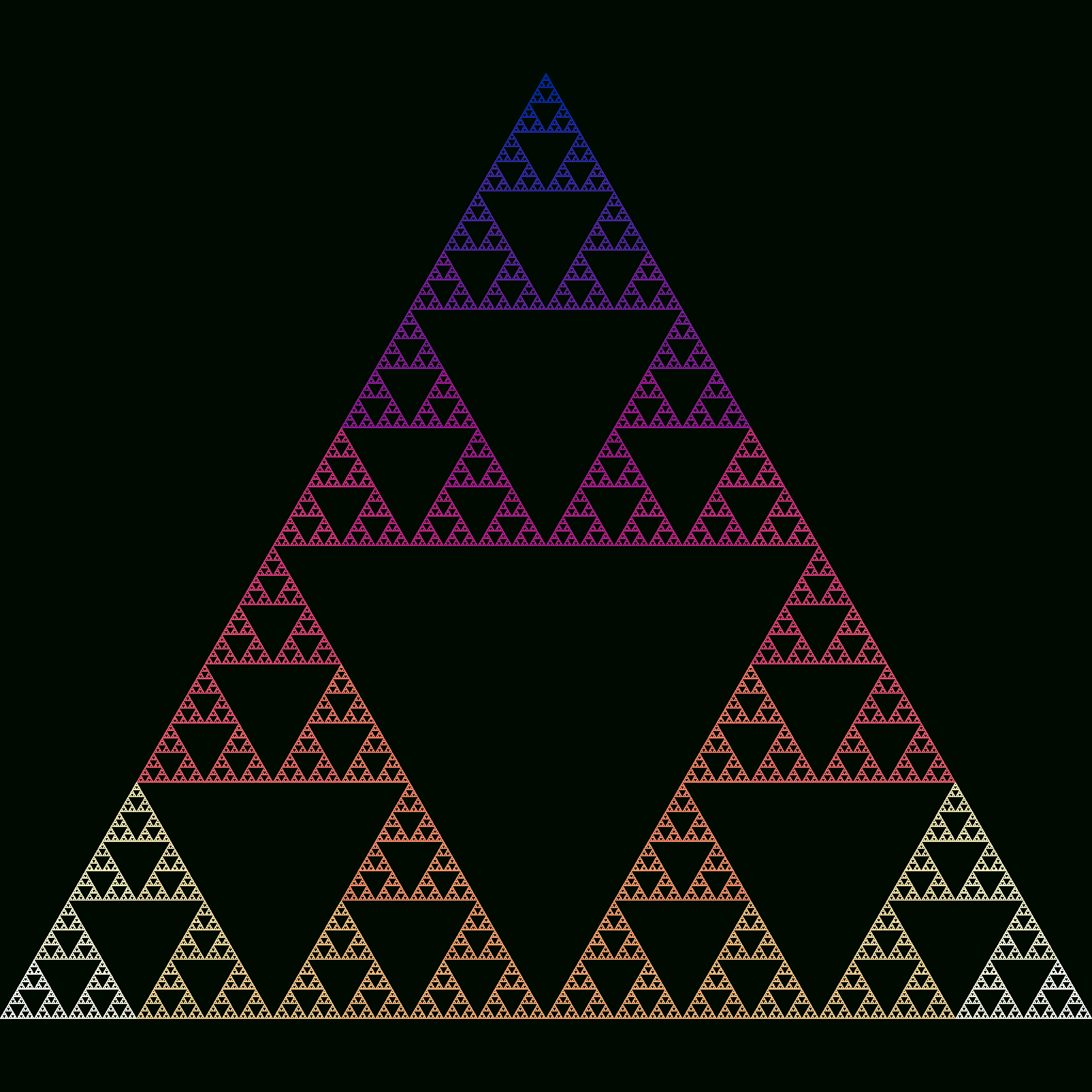
Sierpinski’s triangle:
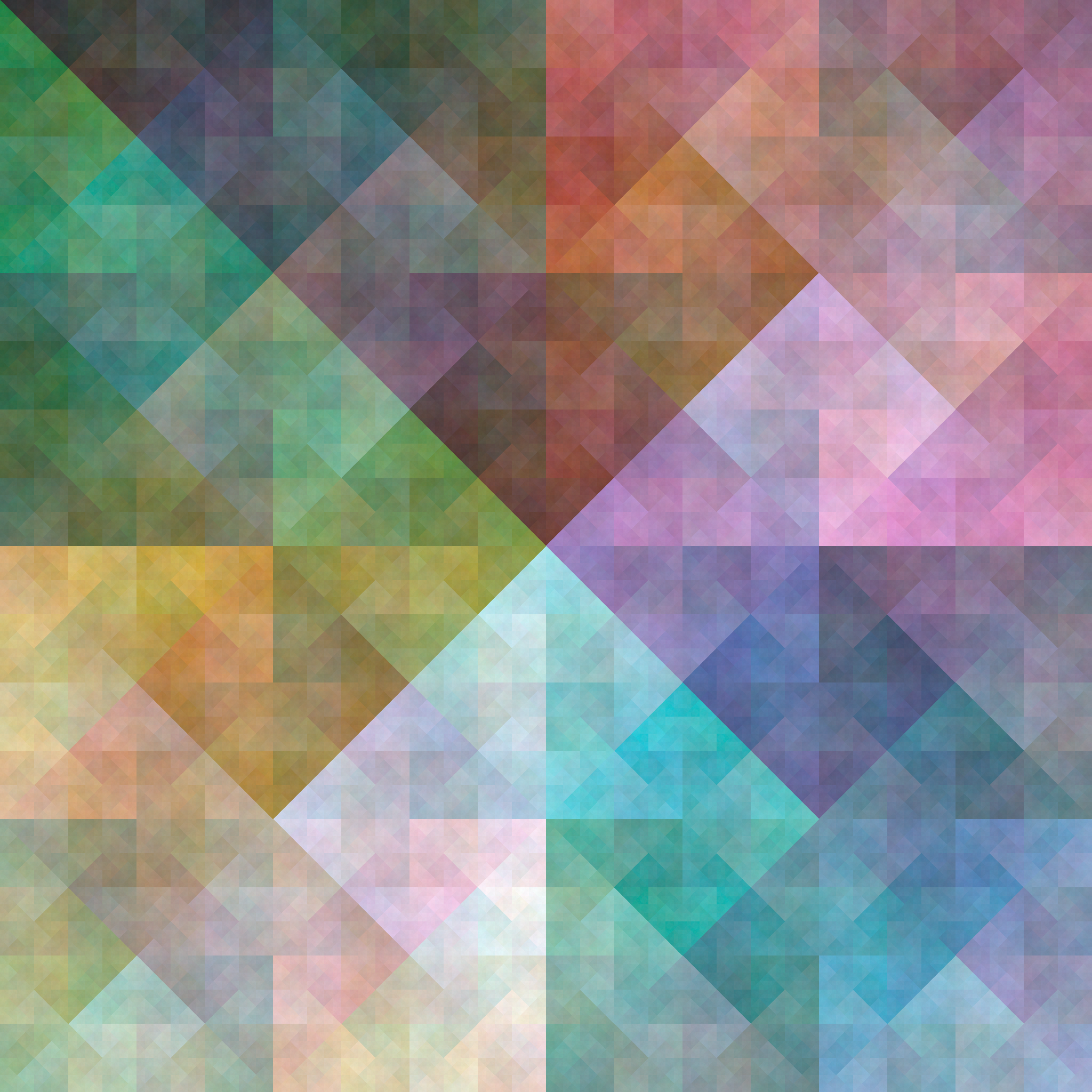
Sierpinski’s space filling curve:
UPDATE: Some new curves. Thanks internet commenters!
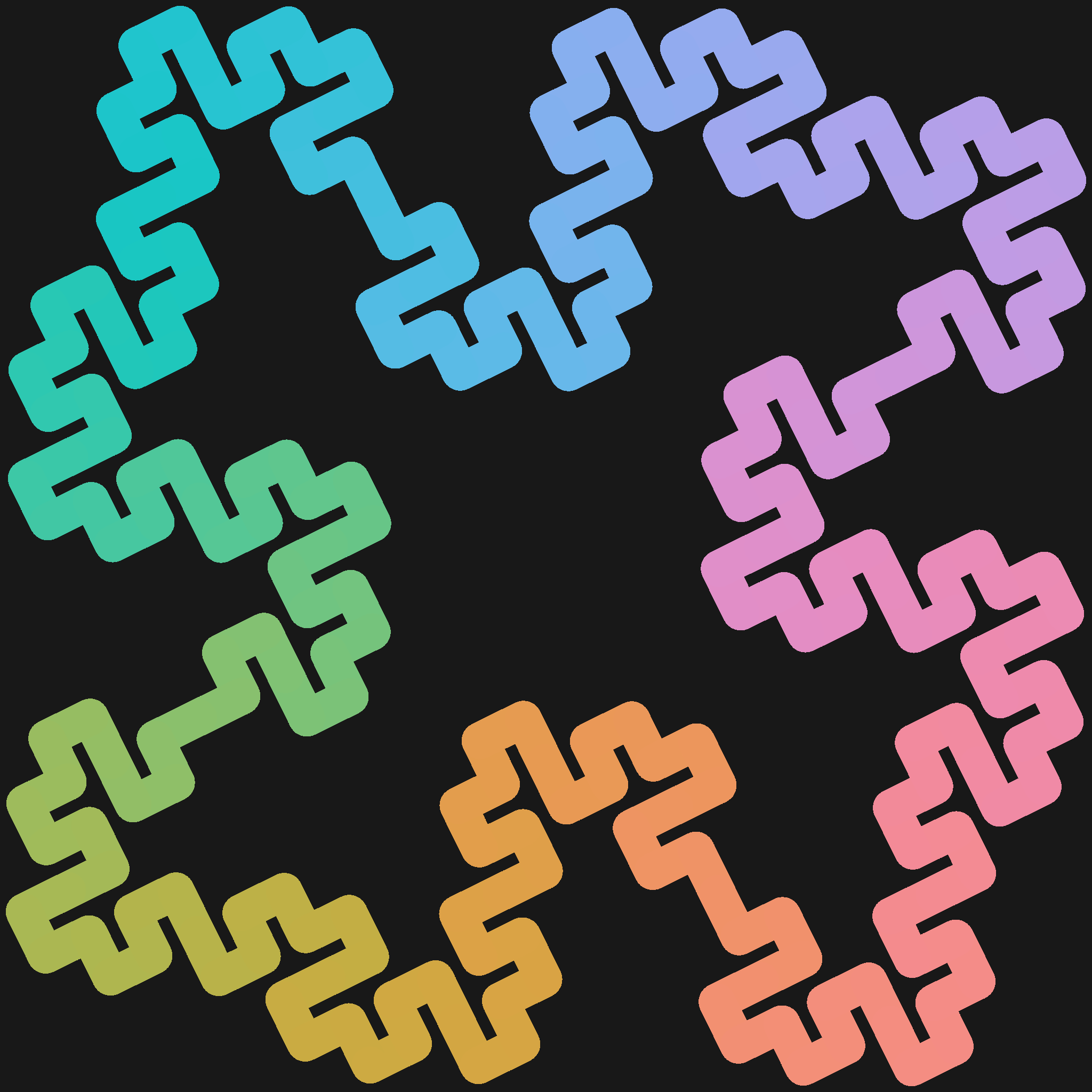
Koch’s “quadratic island”:
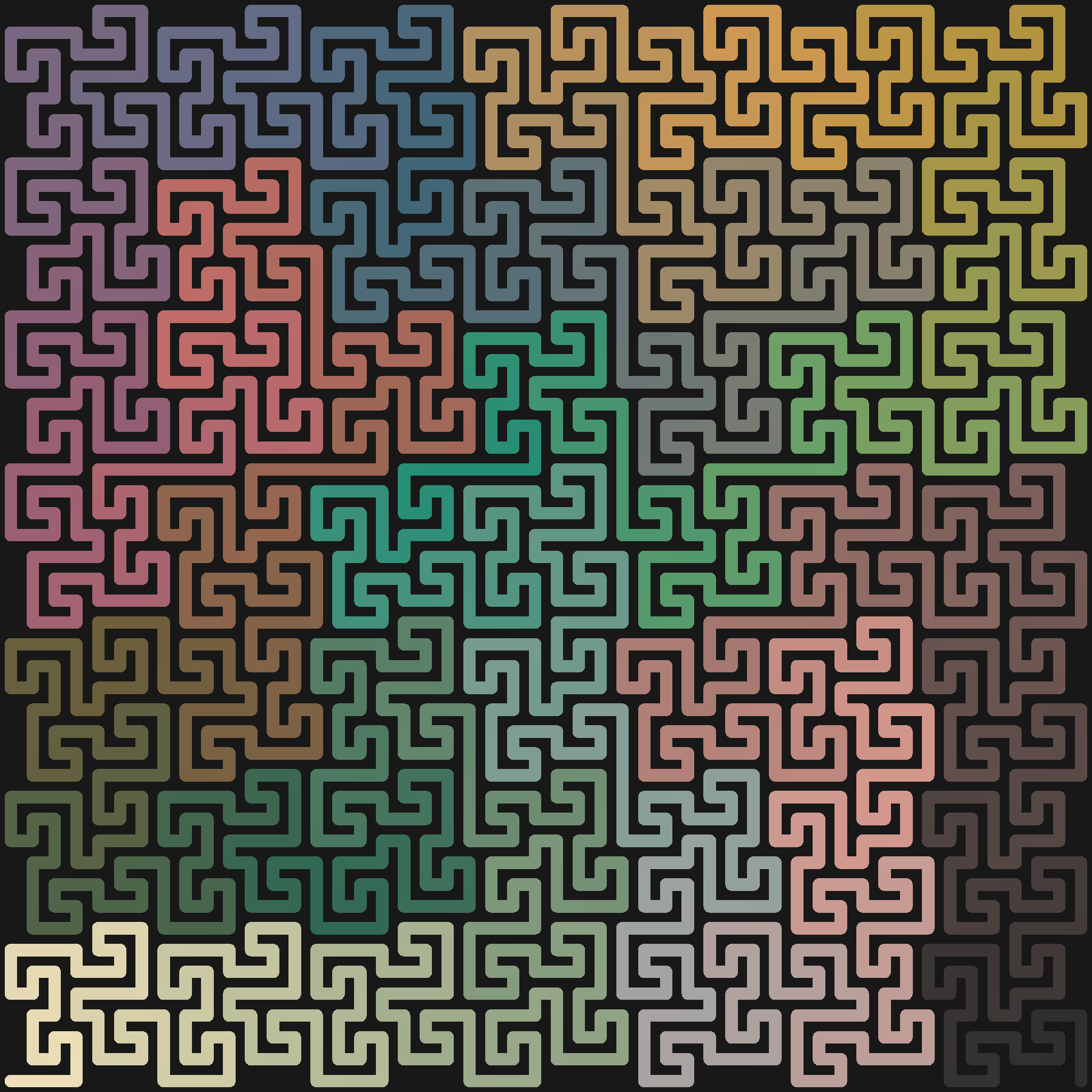
D. M. McKenna’s SquaRecurve:
Repository
The code that generated these images is at https://github.com/justinpombrio/lindenmayer. Feel free to play around with it! I’m especially interested if anyone knows of interesting space-filling curves that I’ve missed.
A couple blocks from where I live, about a year ago, a PhD student at Tufts university named Rümeysa Öztürk was taken by masked, plainclothes DHS officers and held at an ICE detainment facility for six weeks for purely political reasons (she wrote a pro-Palestine op-ed in 2024). Since then, ICE used tear gas, unprovoked, on peaceful protesters while in Portland against the wishes of the cities’ elected officials, and shot Alex Pretti and Renée Good to death. The weaponization of ICE and other federal agencies against those politically opposed to the administration needs to stop.